Nonprofit Restricted Funds For Churches - Do They Apply?


Many nonprofit organizations, including churches and religious institutions, rely on the support of their congregations and donors to carry out their missions.
However, not all donations can be used as the church sees fit. Donations often come with specific instructions or intentions from donors. In the world of nonprofits, these are commonly referred to as "restricted funds."
In this blog, we will explore the fascinating intersection of faith and finance, covering the concept of nonprofit restricted funds. We'll discuss the reasons for their existence, how they can benefit churches, and the importance of transparency and accountability when managing them.
What Is a Restricted Fund?
A restricted fund is a financial account or pool of money earmarked for a specific purpose or with specific limitations on its use. The restrictions placed on these funds can come from donors or they may be self-imposed by the organization.
Here are some key characteristics of restricted funds you need to know as you manage your church's finances:
- Specific Purpose: Restricted funds are earmarked for a particular purpose or project. For example, a nonprofit organization might have a restricted fund for a building renovation project, scholarships, or a specific program.
- Donor or Grant Restrictions: Many restricted funds are created because donors or grantors have provided money with specific instructions on how it should be used. They may require the funds to be used for a particular project, in a certain timeframe, or in a designated geographical area.
- Self-Imposed Restrictions: Ministries may also create their own restricted funds for budgetary and financial management purposes. For example, a church might set up a restricted fund to ensure that finances are available for future expansion or to pay summer camp fees for students who can't afford it.
- Reporting and Accountability: Organizations are typically required to track and report on the use of restricted funds separately from unrestricted funds. Accounting for restricted funds in a non profit ensures transparency and accountability in managing the funds according to their designated purposes.
It's important for organizations to carefully manage and account for restricted funds to ensure compliance with the wishes of the donor. Proper financial management and reporting of restricted funds are critical for maintaining transparency and building trust with stakeholders, including donors, grantors, and the public.

Restricted Fund vs Unrestricted Fund
A restricted fund has a designated purpose, comes with restrictions on its use or application, and the organization is held accountable regarding whether it used the money for its designated purpose.
An unrestricted fund does not come with a specific purpose and grants churches flexibility over how the money is used and how its use is reported.
The primary distinction between restricted and unrestricted funds is the level of control and flexibility in how the funds can be used. Restricted funds have specific, predetermined purposes. Unrestricted funds can be used for general organizational needs without such limitations.
The 3 Basic Types of Nonprofit Funds
There are 3 types of funds that most nonprofits use:
- Unrestricted Funds - Money in an unrestricted fund can be used for any purpose. Most churches have a "General Fund" that serves this purpose.
- Temporarily Restricted Funds - The money must be used for a specific purpose.
- Permanently Restricted Funds - These are usually invested funds held in perpetuity. The interest earned from these funds may be used toward whatever the church deems best. However, even the interest can be restricted for a specific use that the donor of the invested funds specified.
You may already have restricted funds at your church and not know it! That's because many churches call them by another name.

17 Other Names for Restricted Funds
Restricted Funds are also called:
- Designated Funds
- Allocated Funds
- Temporarily Restricted Funds
- Donor-Restricted Funds
- Specified Funds
- Committed Funds
- Project-Specific Funds
- Program Funds
- Conditional Funds
- Ring-Fenced Funds
- Segregated Funds
- Special-Purpose Funds
- Purpose-Restricted Funds
- Directed Funds
- Use-Restricted Funds
- Earmarked Funds
- Ministry Funds
Types of Restrictions
Restricted funds may be permanently or temporarily restricted, depending on the designation of the funds. Below are the types of restrictions nonprofit leaders need to be aware of:
- Temporarily Restricted: Monies that have been restricted for a particular purpose or period
- Permanently Restricted: Endowments or gifts where the principal cannot be touched, but the income generated can be used. However, even the interest earned may be restricted or unrestricted, depending on the donor's wishes.
- Purpose-Restricted: Funds restricted for a specific purpose, such as missions, building projects, or youth programs
Why Restricted Funds Exist
While the majority of your church's income comes in the form of unrestricted gifts placed in a General Fund, many donors are willing to give above and beyond their normal support by giving to a specific cause or need. For instance, your members might also offer money to be used for missionaries, VBS, outreach and evangelism, youth camp scholarships, love offerings, and many other ministry efforts.
Creating restricted funds and setting donations into those funds assures donors that you use their contributions according to their wishes. Even more so if you label the donations accordingly as you record them in your church giving software.

How Churches Typically Receive Restricted Funds
Most churches receive designated funds through special offerings. A love offering collected to pay the medical bills of another member is a common example because that is a restricted gift placed in a specified Love Offering Fund before being disbursed to that member.
Members can also make designation donations on their own accord. If your church has already established a Ministry Fund, like a scholarship fund for your students, members can donate to that at any time.
But there are other ways restricted funds are given to churches. Sometimes money is bequeathed to the church in a member's will, or a local business will partner with a church to fund a community initiative. For as many ways as there are to donate to a church, money can be given to a restricted fund.
Management and Responsibility
Meticulous record-keeping is paramount when managing your restricted funds. Because donors are giving toward a specific ministry effort or initiative, your accounting has to reflect that.
Fund-based accounting standards are best for most church or nonprofit accounting. Having an easy-to-use church accounting software will make the work of tracking these funds a no-brainer.
Misusing restricted funds, or doing anything that appears to misuse them, is the fastest way to lose the trust of your members. Recording keeping, reporting, and communicating will go a long way to help your donors know that their donations are safe.
Whether your church finances are managed by a treasurer, finance committee, or elder board, your church's leadership will impact whether donors feel they can trust your ministry with their money.

6 Best Practices for Managing Restricted Funds
We've covered why restricted funds are important and why we should manage them. Now it's time to cover how to do that!
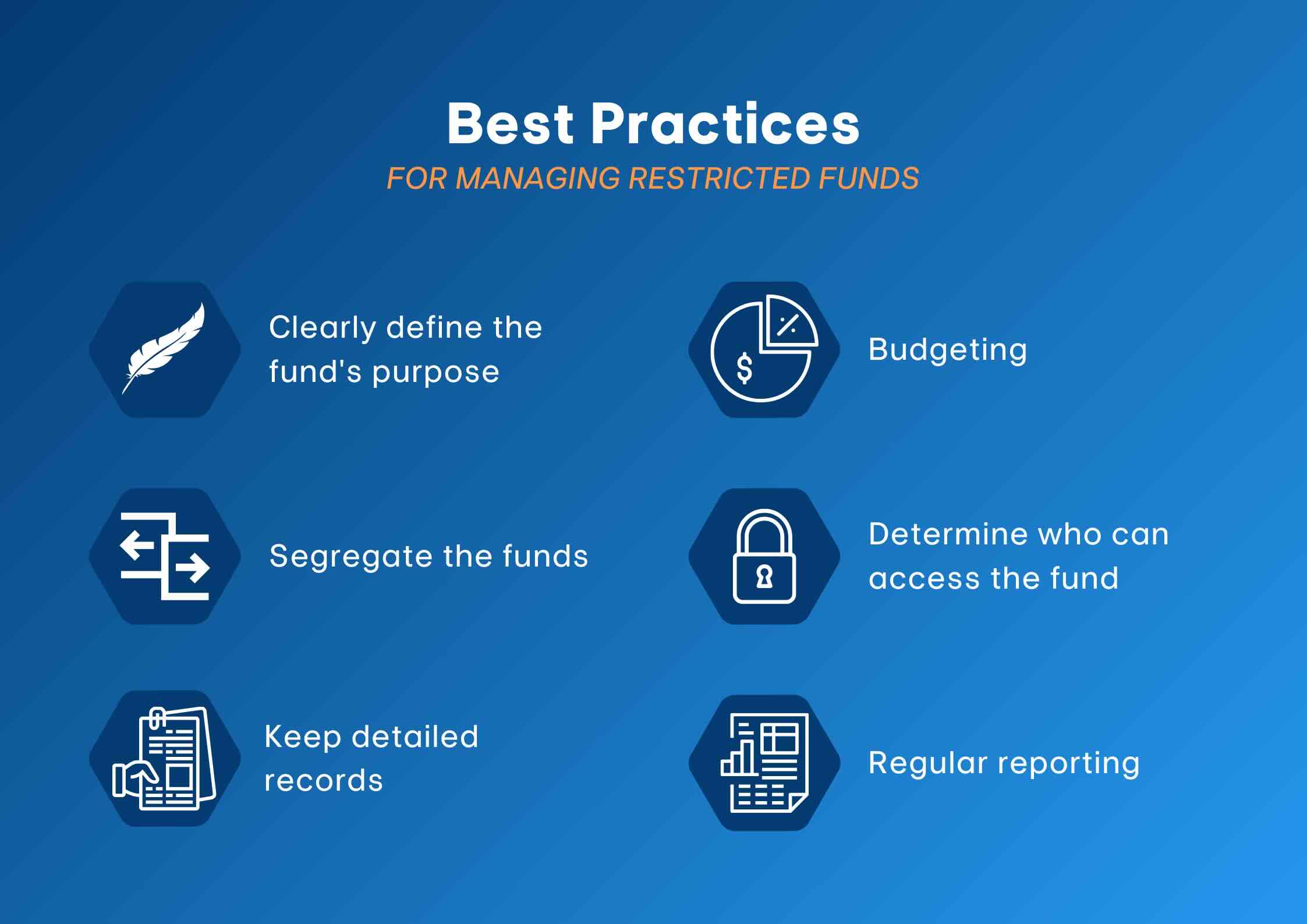
Below are the 6 best practices for managing non profit designated funds:
1. Clearly Define the Fund's Purpose
This helps avoid any confusion about where to allocate donations.
Also, if you share the fund's purpose with your congregation, a donor may be even more motivated to make a restricted donation, knowing that your church has such a missional focus on its finances.
2. Segregate the Funds
Keeping the funds distinct and separate is crucial. Having a designated fund established before the donations are received means the finance secretary (or whoever at your church is in charge of tracking these funds) has somewhere to put them.
Using a church accounting software program will make this process easy, especially if it's a fund-based accounting system.
3. Keep Detailed Records
Keep meticulous records of all financial transactions related to restricted funds, including income, expenditures, and investment earnings. This documentation helps ensure compliance and transparency. It also makes it easier to budget for your church.
4. Budgeting
If each restricted fund is something your church needs to actively raise money for, make sure your church budget has a line item for each restricted fund. That way you can track your progress toward your monthly and annual fundraising targets.
5. Determine Who Can Access the Fund
Create guidelines around who has the authority to withdraw money from a designated fund, how that withdrawal is approved, and how the money is to be withdrawn from that fund.
6. Regular Reporting
If you're maintaining meticulous records, you can produce reports that help clarify how the funds have been used. You may need these reports for your elder board or denomination.
It's important to regularly communicate with your members and supporters about the money in each designated fund. Create reports to share with your congregation at least once a year so they can stay in the loop and celebrate all that God is doing through your ministry!
Benefits of Restricted Funds for Churches
Restricted funds can encourage targeted giving and greater engagement from your members. If you clearly define the fund's purpose and communicate with your members about how you use the funds, the members who care about the fund's designated purpose will be more likely to go above and beyond in their support by giving to that fund.
These funds also help build trust with your congregation and donors. When paired with detailed reporting, donors have a visceral display of exactly how their donations were used and the ministry your church accomplished with their contributions!
Restricted Funds for Nonprofits Apply to Your Church
Non profit restricted funds play a crucial role in the mission of every church. Through responsible management and transparency, your members will learn to trust their donations in your care.
Every church leader must prioritize managing restricted funds. The future of your church may depend on it.